

Kilimanjaro Summit Night Tips & Ascent Guide
Climbing Mount Kilimanjaro is one of the greatest trekking adventures in the world. Standing at 5,895 meters above sea level, Kilimanjaro is the highest mountain in Africa and attracts thousands of climbers every year who dream of reaching its famous summit.
The most challenging and exciting part of the climb is summit night. This final ascent begins in the middle of the night and requires determination, patience, and proper preparation. Climbers leave their high camps in darkness and hike slowly for several hours toward the summit while temperatures drop well below freezing.
With the right mindset, good preparation, and experienced guides, summit night becomes an unforgettable moment in the Kilimanjaro journey. Reaching Uhuru Peak at sunrise is a powerful achievement and a reward for days of trekking through different climate zones on the mountain.
Understanding the Challenge of Summit Night
Summit night is widely considered the most demanding stage of climbing Mount Kilimanjaro. Climbers typically begin their ascent between midnight and 1:00 AM from high camps such as Barafu Camp or Kibo Hut depending on the climbing route.
The trail leading to the crater rim is steep and covered with loose volcanic scree. Because of the high altitude, oxygen levels are significantly lower, which makes each step slower and more challenging.
Temperatures during summit night can drop to negative degrees, and strong winds are common near the summit. Climbers must move slowly and conserve energy while following the guidance of their mountain guides.
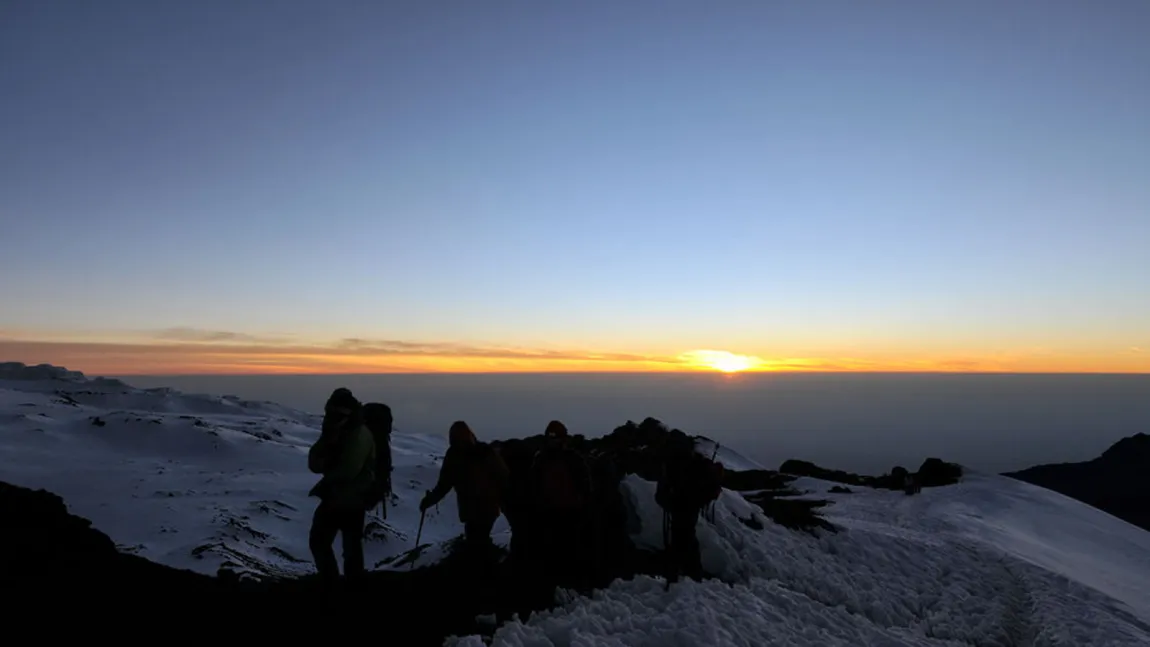
Although summit night is physically demanding, reaching the crater rim and watching the sunrise over Africa is one of the most rewarding experiences on the mountain.

Kilimanjaro Summit Night Tips
Proper preparation is essential for a successful summit attempt. Following key summit night tips can greatly improve your chances of reaching the top safely and comfortably.
One of the most important tips is dressing in warm layers. Temperatures can drop dramatically as climbers approach the summit, so wearing thermal base layers, insulated jackets, waterproof outer shells, warm gloves, and thermal socks helps maintain body heat throughout the climb.
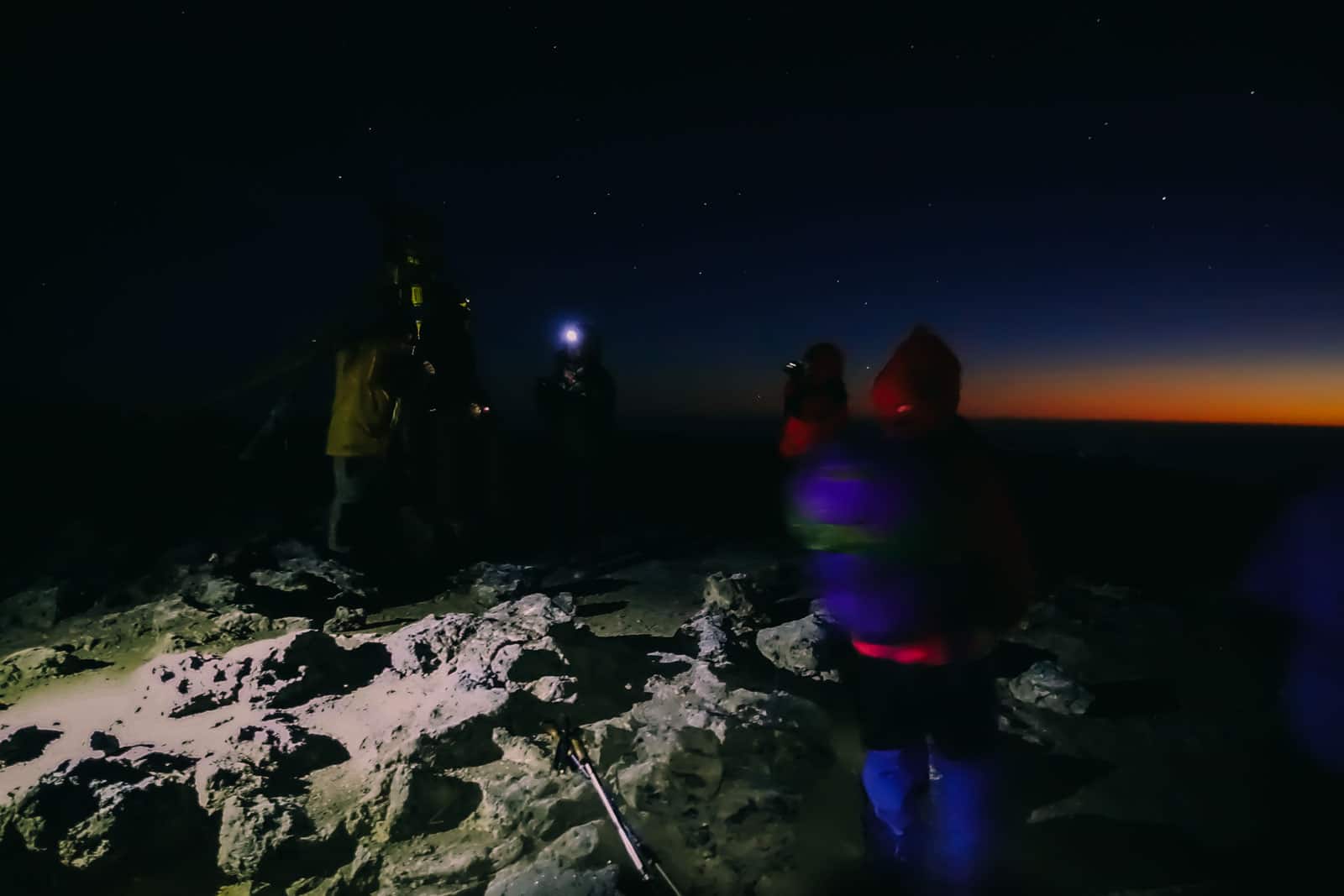
A reliable headlamp is another essential item because the ascent begins in complete darkness. Climbers use headlamps to safely navigate the rocky trail while keeping their hands free for balance.
Maintaining a slow and steady pace is also critical. Guides often remind climbers of the Swahili phrase “pole pole,” which means slowly slowly. Moving too fast can cause exhaustion or increase the risk of altitude sickness. By walking slowly and breathing steadily, climbers conserve energy for the long trek to the summit.
How to Reach Uhuru Peak
Reaching Uhuru Peak is a gradual process that usually happens in several stages during summit night. Climbers begin their ascent from high camp and slowly make their way up the mountain toward the crater rim.
The first major milestone is reaching either Stella Point or Gilman’s Point, depending on the route taken. This section of the climb is often the most physically demanding because it involves steep uphill trekking on loose volcanic gravel.
Once climbers reach the crater rim, the hardest part of the climb is usually behind them. From here, the trail becomes more gradual as it follows the rim of Kilimanjaro’s crater toward the final summit.
The last section of the trek from Stella Point or Gilman’s Point to Uhuru Peak typically takes about 45 minutes to one hour. During this time, the sunrise often begins to appear on the horizon, illuminating the glaciers and snow-covered summit.
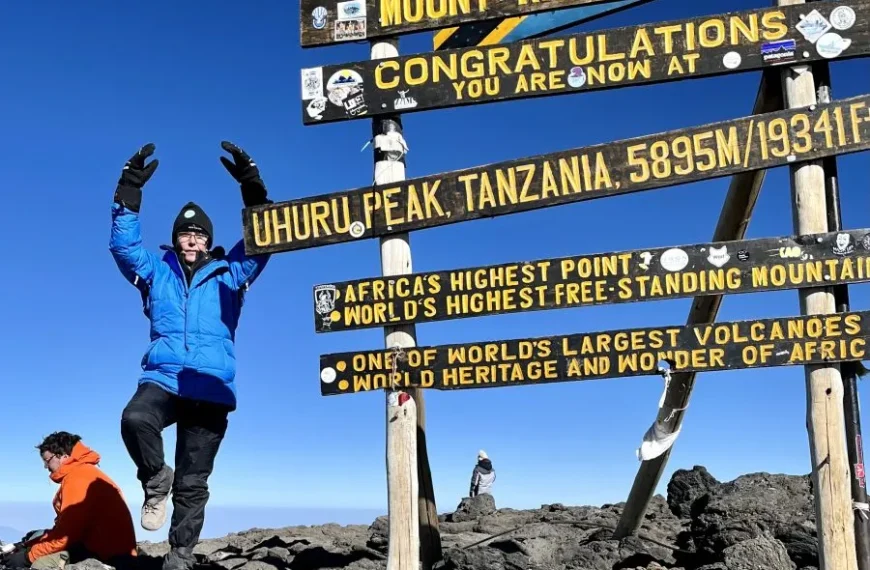
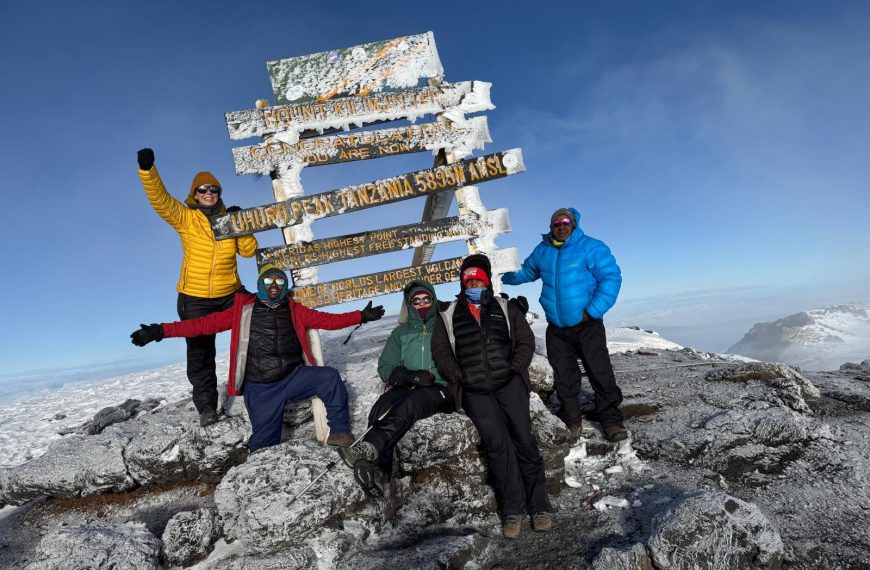
Standing at Uhuru Peak, often called the Roof of Africa, is a moment of pride and celebration for every climber.

Kilimanjaro Summit Ascent Guide
Success on summit night depends on several important factors including hydration, nutrition, and mental strength.
Staying hydrated throughout the climb is extremely important. Even though temperatures are cold and climbers may not feel thirsty, drinking enough water helps prevent dehydration and supports acclimatization to high altitude.
Eating energy-rich snacks during the ascent also helps maintain strength. Many climbers carry snacks such as energy bars, chocolate, nuts, dried fruits, or biscuits. Small amounts of food consumed regularly can help keep energy levels stable during the long climb.
Protecting yourself from the cold is another essential part of summit preparation. Gloves, insulated boots, and proper layering help prevent frostbite and maintain body warmth during the climb.
Finally, staying mentally focused plays a major role in reaching the summit. Summit night can be challenging, but taking one step at a time and trusting the pace set by your guide can make the climb manageable and rewarding.
Professional Kilimanjaro Guides
Experienced guides play a crucial role in helping climbers reach the summit safely. Guides monitor climbers closely during summit night, watching for signs of altitude sickness and adjusting the pace when necessary.
Professional Kilimanjaro guides also provide motivation and encouragement during the most difficult moments of the climb. Their experience and knowledge of the mountain help ensure that climbers move safely and efficiently toward the summit.
During the expedition, guides also perform regular health checks including monitoring oxygen levels and overall physical condition to ensure climbers remain safe at high altitude.

Why Climb Kilimanjaro with Boko Explorers
Choosing the right climbing company is one of the most important decisions when planning a Kilimanjaro expedition.
Boko Explorers specializes in organizing safe and professionally guided climbs on Mount Kilimanjaro. Each expedition is carefully planned to provide proper acclimatization, comfortable camping arrangements, and experienced mountain crews.
Climbers benefit from licensed guides, dedicated porters, nutritious meals, and high-quality trekking equipment throughout the journey. The team focuses on safety, support, and creating a positive climbing environment that helps increase summit success rates.
With professional guidance and strong teamwork, Boko Explorers helps climbers turn their dream of standing on the Roof of Africa into reality. Summit night is the most challenging and rewarding stage of climbing Mount Kilimanjaro. The slow overnight ascent through cold temperatures and high altitude tests both physical endurance and mental determination.
However, reaching Uhuru Peak at sunrise is an unforgettable moment that makes every step of the journey worthwhile. With proper preparation, the right equipment, and expert guidance from Boko Explorers, climbers can approach summit night with confidence and successfully complete one of the world’s most iconic trekking adventures.